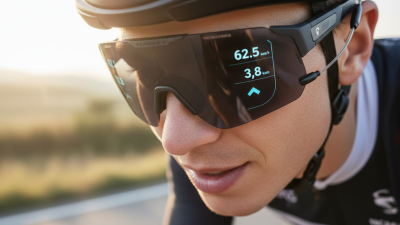
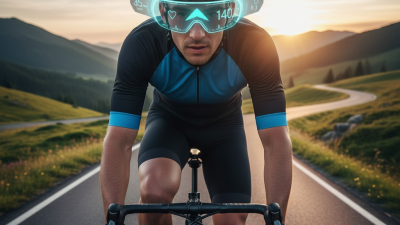
| Impact Protection |
Look for documented compliance with a recognized eyewear safety standard, such as
ANSI Z87.1 or EN 166, where applicable.
|
Cycling glasses may be exposed to stones, insects, branches, and falls. A tested
impact rating provides more meaningful protection than a general claim such as
“sports grade.”
|
Check the product markings, declaration of conformity, laboratory test report, and
exact scope of the certification. Confirm that the rating applies to the complete
eyewear, not only to replacement lenses.
|
Essential |
| UV Protection |
Choose lenses marked UV400 or documented to block ultraviolet
radiation up to 400 nm, including UVA and UVB.
|
UV exposure can occur even on cloudy days and during long rides. Lens darkness
alone does not prove UV protection.
|
Request a test specification or conformity information. Avoid relying only on
lens color, tint, or a marketing photograph.
|
Essential |
| Visible Light Transmission |
Use a lens suitable for the route and weather:
- 80–100% VLT: night or very low light
- 43–80% VLT: overcast or shaded conditions
- 18–43% VLT: variable daylight
- 8–18% VLT: bright sunlight
|
The correct VLT helps maintain contrast and reduces glare without making hazards
difficult to see in tunnels, wooded areas, or late-day conditions.
|
Check the measured VLT for each lens option. If riding in changing light, consider
interchangeable or photochromic lenses, but verify their actual transition range.
|
Essential |
| Polarization |
Polarized lenses can reduce reflected glare from wet roads, vehicles, and water.
Confirm whether the display remains readable with polarized lenses.
|
Glare reduction can improve visual comfort, but some LCD, OLED, or vehicle displays
may appear dim, distorted, or partially black at certain viewing angles.
|
Test the glasses with a phone, cycling computer, navigation screen, and vehicle
display in both portrait and landscape orientations.
|
Route-dependent |
| Optical Clarity |
Prefer lenses with clear peripheral vision, low distortion, and stable optical
alignment. A wide wraparound design should not bend straight lines noticeably.
|
Distortion near the edges can affect hazard detection, balance, and visual comfort,
especially when checking traffic without turning the head.
|
View straight window frames or roof lines through the lens and move the glasses
slowly across the field of view. Look for waviness, blur, or color fringing.
|
Essential |
| Field of View |
Choose a design that preserves unobstructed forward and peripheral vision while
wearing a helmet and keeping the head in a normal riding position.
|
A wide field of view supports awareness of traffic, cyclists, pedestrians, and
road edges.
|
Wear the glasses with the intended helmet and look forward, downward, and over both
shoulders. Check for frame, camera, speaker, or display obstruction.
|
Essential |
| Weight and Balance |
A practical target is approximately 30–45 g, with the weight
distributed evenly rather than concentrated at the front or one side.
|
Excess weight can cause nose pressure, ear fatigue, slipping, and neck discomfort
during long rides.
|
Wear the glasses for at least 15–20 minutes. Check for pressure points on the nose,
temples, ears, and helmet straps, and test them while looking down.
|
High |
| Fit and Adjustability |
Look for adjustable nose pads, secure temple arms, a stable bridge, and compatibility
with common helmet shapes. The frame should not move during head turns.
|
A secure fit prevents the optical center or heads-up display from shifting and
reduces the need to adjust the glasses while riding.
|
Perform controlled head movements, light jogging, and a forward-leaning cycling
posture. Check whether the frame slips when sweating.
|
Essential |
| Prescription Compatibility |
Confirm whether the design supports direct prescription lenses, an optical insert,
or neither. Check the supported prescription range and lens thickness limits.
|
Incorrect optical positioning can cause blur, eye strain, headaches, or an
inaccurate heads-up display.
|
Provide the complete prescription, including sphere, cylinder, axis, and pupillary
distance, and ask for the optical center and insert specifications.
|
Essential for Prescription Users |
| Ventilation and Anti-Fogging |
Prefer airflow channels, anti-fog treatment, and sufficient separation between the
lens and face. A replaceable anti-fog coating is useful for humid conditions.
|
Fogging can obscure traffic, road obstacles, and navigation information during
climbs, rain, or stops.
|
Test the glasses in a warm indoor environment and during low-speed riding. Check
whether the vents work with the chosen helmet and do not create excessive wind noise.
|
High |
| Water and Sweat Resistance |
For regular outdoor use, look for at least a documented splash-resistance level such
as IPX4. Higher protection may be preferable for heavy rain, but
the rating must cover the complete device.
|
Sweat, rain, and condensation can damage electronics or cause charging and control
problems.
|
Check the official IP rating and its test scope. Confirm whether the charging port
must be closed and whether use during heavy rain is permitted.
|
High |
| Battery Runtime |
For a typical training or commuting session, target at least 6–8 hours
of stated active-use runtime. Treat standby time as a separate figure.
|
Navigation, audio, cameras, displays, and wireless connections can consume more
power than basic standby operation.
|
Compare runtime with the intended combination of features. Check charging time,
battery replacement policy, cold-weather performance, and whether a case provides
extra charges.
|
High |
| Charging and Battery Safety |
Prefer a protected charging system with clear charging indicators, over-temperature
protection, and a documented battery capacity and warranty period.
|
Reliable charging reduces the risk of failure before or during a ride and helps
prevent unsafe charging practices.
|
Verify connector type, charging voltage, charging time, battery replacement options,
and instructions for charging after exposure to moisture.
|
High |
| Wireless Compatibility |
Check compatibility with the required phone operating system and supported Bluetooth
profiles. Bluetooth Low Energy is commonly used for low-power controls and data.
|
Compatibility affects calls, audio, notifications, firmware updates, navigation
data, and connection stability.
|
Confirm support for the exact operating-system version, required application,
Bluetooth profile, account registration, and regional availability of functions.
|
Essential |
| Cycling Computer and Sensor Support |
Verify whether the glasses can receive data from the intended cycling computer,
heart-rate monitor, power meter, speed sensor, or navigation application.
|
Many devices can connect to a phone but cannot directly communicate with cycling
sensors or display third-party data.
|
Ask for a supported-device list and confirm the required connection path:
sensor-to-glasses, sensor-to-phone, or sensor-to-cycling computer.
|
High |
| Display Readability |
The display should remain readable in bright sunlight without blocking the road.
Important information should be limited to concise items such as speed, direction,
alerts, or turn prompts.
|
A poorly positioned or overly bright display can distract the rider and reduce
awareness of surrounding traffic.
|
Test the display in direct sun, shade, tunnels, and with sunglasses or prescription
inserts. Confirm brightness control, font size, and alert customization.
|
Essential |
| Audio and Environmental Awareness |
Prefer open-ear or directional audio that allows the rider to hear horns, bells,
approaching vehicles, and verbal cues.
|
Blocking environmental sounds increases the risk of missing important warnings in
traffic.
|
Test audio at normal riding speed. Confirm that volume can be controlled quickly
and that the design does not fully seal both ears.
|
Essential |
| Controls and Distraction |
Use large, tactile controls or voice commands that can be operated without taking
both hands off the handlebars. Avoid functions requiring frequent visual interaction.
|
Complex controls can increase reaction time and divert attention from road hazards.
|
Test answering a call, dismissing an alert, changing volume, and stopping navigation
while stationary first. Check whether accidental touches are common.
|
Essential |
| Navigation Reliability |
Confirm whether navigation depends on a phone, cellular service, GPS, or a separate
cycling computer. Offline route support is valuable for areas with weak coverage.
|
A connection-dependent display may stop providing guidance in tunnels, rural roads,
or locations with unstable mobile service.
|
Test route recalculation, turn alerts, offline maps, location accuracy, and behavior
when the phone connection is interrupted.
|
High |
| Camera and Privacy |
If equipped with a camera, check recording resolution, stabilization, storage,
indicator lights, microphone behavior, and local privacy requirements.
|
Cameras can add useful ride documentation but may create privacy concerns or distract
the rider.
|
Confirm when recording is active, how files are transferred, whether recording can
be disabled, and where captured data is stored.
|
Optional |
| Durability and Serviceability |
Look for replaceable lenses, replaceable nose pads, reinforced hinges, sealed
electronics, and a clearly stated warranty and repair process.
|
Cycling glasses are exposed to sweat, vibration, impacts, temperature changes, and
frequent lens cleaning.
|
Check spare-part availability, repair locations, warranty exclusions, firmware
support period, and whether water or lens damage voids coverage.
|
High |
| Cleaning and Maintenance |
The lenses should be compatible with clean water, mild soap, and a microfiber cloth.
Avoid abrasive materials and solvents unless the manufacturer explicitly permits them.
|
Dust, sweat salts, and incorrect cleaning can scratch coatings and reduce optical
clarity.
|
Review the cleaning instructions and confirm whether the anti-reflective, photochromic,
or anti-fog coating has special care requirements.
|
Medium |
| Total Ride-Ready Package |
Include the glasses, protective case, charging cable or dock, spare lenses or insert,
cleaning cloth, firmware application, and any required mounting accessories.
|
A low purchase price may not represent the actual cost if essential accessories or
prescription components are sold separately.
|
Compare the complete delivered package, accessory prices, import costs, taxes,
software requirements, warranty coverage, and after-sales support.
|
High |
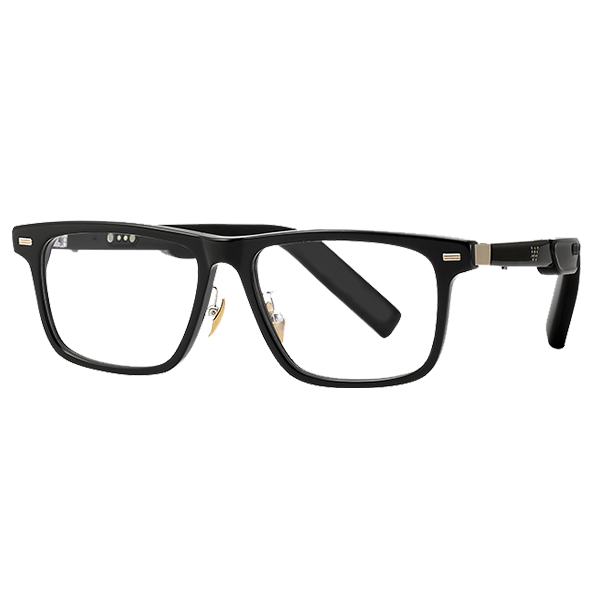 Smart Glasses
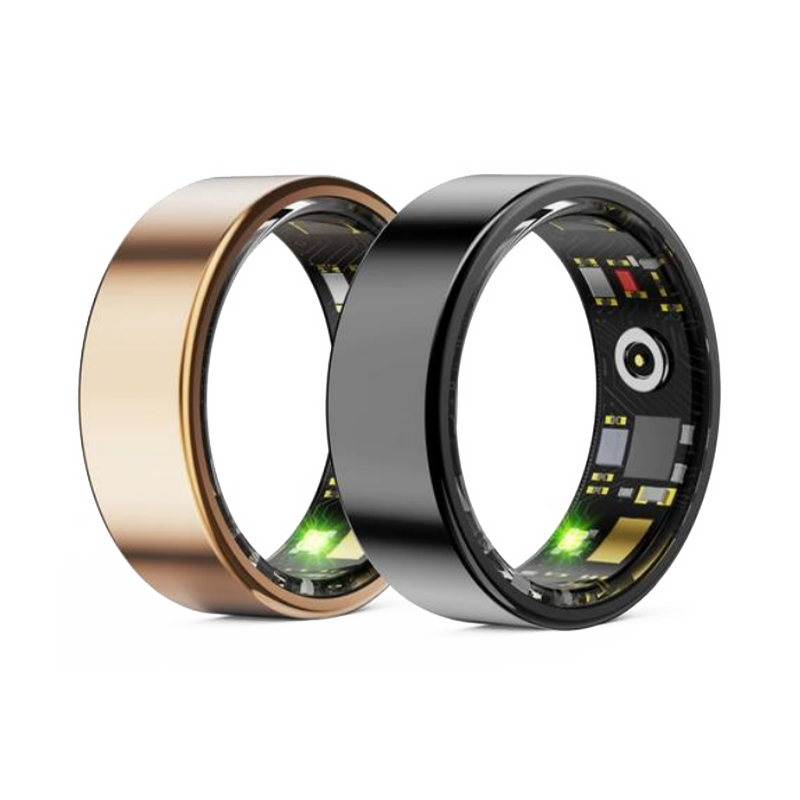 Smart Ring
 Smart Locator


 +86-13613020876

 CONTACT NUMBER
 CONTACT NUMBER